VSTS Integration
Visual Studio Team Services (VSTS) was renamed to Azure DevOps in September 2018. If you are using Azure DevOps cloud, please refer to the Azure DevOps integration instead. This page covers VSTS and on-premise Azure DevOps Server installations.
Authentication
Supported authentication methods
Personal token
To proceed with this authentication type you need to obtain API token from VSTS. Steps below will instruct you how to do that.
Sign in to either your Azure DevOps account (https://{youraccount}.visualstudio.com) or your Azure DevOps Server web portal (https://{server}:8080/tfs/). For older TFS installations, the URL format may vary.
From your home page, open your profile. Go to your security details.

Create a personal access token.
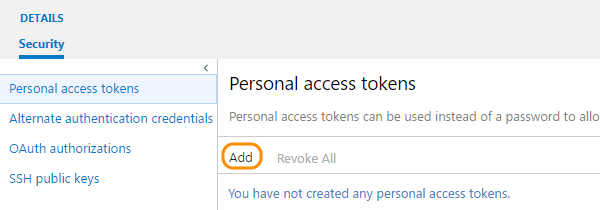
Name your token. Select a lifespan for your token. If you're using Team Services, and you have more than one account, you can also select the Team Services account where you want to use the token.
Now you need to specify permissions that token will grant. Bugsee requires Project and team (read) and Work items (read and write) scopes to function properly.
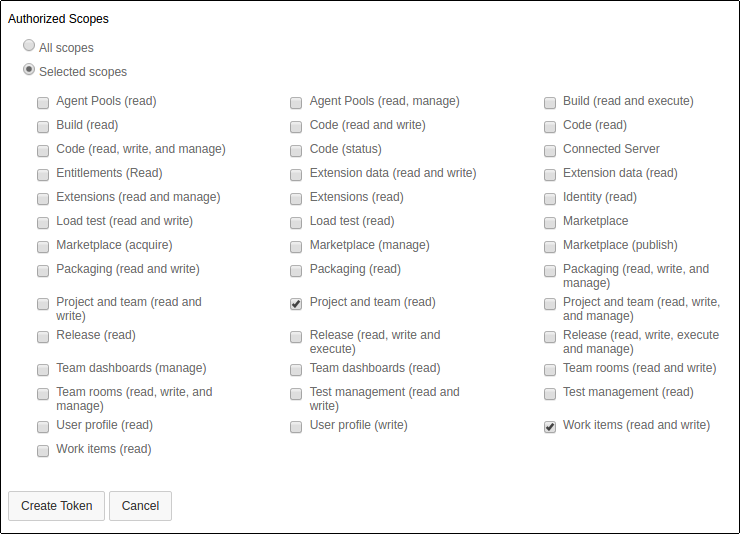
When you're done, make sure to copy the token. You'll use this token as your password.

Now, when you've obtained a token, let's configure the integration in Bugsee.
Provide valid host (URL to your VSTS) and paste generated token.
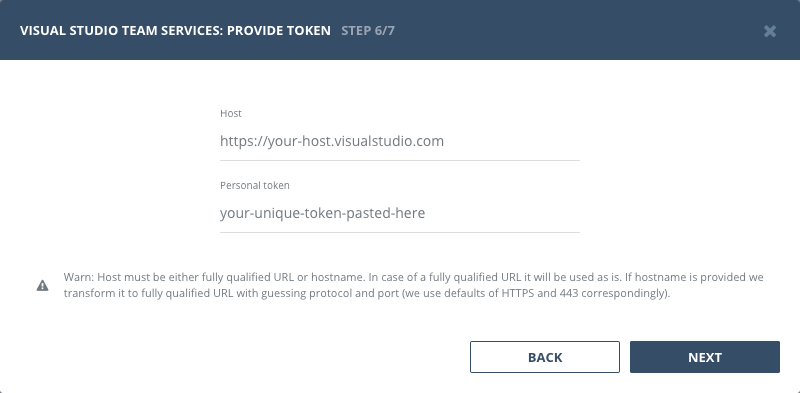
Configuration
There are no specific configuration steps for Visual Studio Team Services. Refer to configuration section for description about generic steps.
Custom recipes
Bugsee can accommodate all the customizations required for your VSTS with the help of custom recipes. This section provides a few examples of using custom recipes with VSTS. For basic introduction, refer to custom recipe documentation.
Setting tags field
By default Bugsee creates and updates VSTS bugs with Bugsee issue labels as VSTS tags. But labels list can be overridden inside your custom recipe. For example you can add some new label (VSTS tag) to existing ones:
function create(context) {
	// ....

    return {
    	// ...
    	labels: [...issue.labels, "My awesome tag"]
    };
}

function update(context, changes) {
	const result = {};
	// ...

    if (changes.labels) {
        result.labels = [...changes.labels.to, "My awesome tag"];
    }

	return {
        issue: {
            custom: {}
        },
        changes: result
    };
}
Setting custom fields
Custom fields for VSTS must be set as an array of objects ({ op, path, value }) inside the "fields" attribute, like shown below:
function create(context) {
	// ....

    return {
    	// ...
    	custom: {
    		fields: [
                {
                    op: 'add',
                    path: '/fields/System.Reason',
                    value: 'New task'
                }
            ]
    	}
    };
}